Craft
How Long Should a Follow-Up Email Be?
Maya Ellison · Former enterprise AE, now Sales Email Template editor · 2026-06-14 · 10 min read
Last updated: 2026-09-02 · Reviewed by: Sales Email Template editors
We write templates the way we wrote emails on quota: short, specific, and easy to forward. When we cite research below, it is because the number changes how a buyer reads your note, not to pad the page.
Sources: HubSpot sales email benchmarks; Gong follow-up research
Last quarter I watched a strong AE lose a deal because touch four said "just bumping this." The buyer later admitted they were waiting on legal. The product was fine. The thread wasn't.
If they have to scroll on their phone, you already lost the bump. Follow-up emails are not shorter because buyers have short attention spans. They are shorter because the context already exists. Your job is to add one new thing and one easy reply, not to re-deliver the keynote.
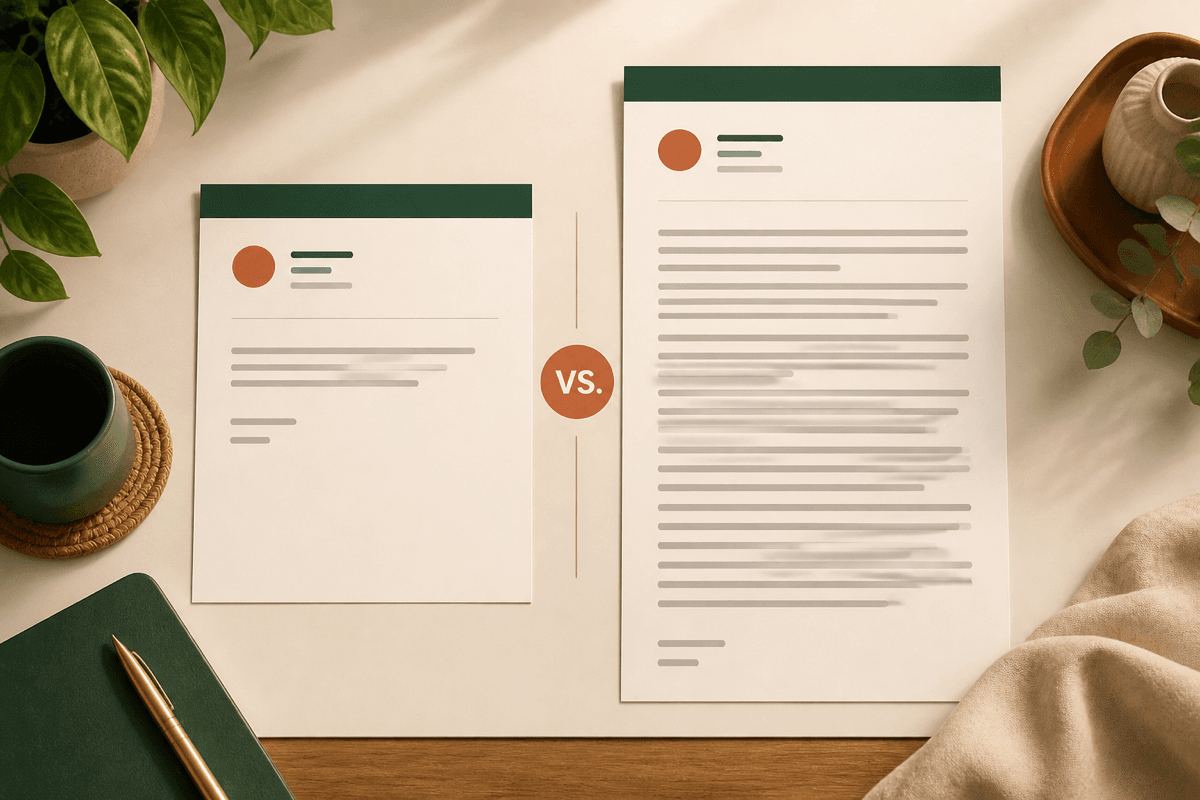
Default rule: a follow-up should be shorter than the email you are following. If your first note was 90 words, your second should not be 200. If your first note was already too long, the follow-up is not the place to add the paragraphs you cut.
Key takeaways - CEO follow-ups: often 50 to 70 words. - Technical buyers: slightly longer only when the substance is new. - Cut biography, compliments, and second asks first. - One CTA per email. Make it answerable in one thumb tap. - If you cannot say it shorter, you may not know the point yet.
Why shorter follow-ups win
Boomerang's widely cited analysis of millions of emails found that shorter messages often see better response rates than long ones. You do not need to worship a single study. You need to respect that most sales email gets read between meetings, on a phone, with half an eye on something else.
Follow-ups also arrive with baggage. The reader already knows who you are, or at least remembers the thread. Re-explaining your company history feels like nagging even when you call it "providing context."
Length by role and situation
| Reader | Target length | What can be longer |
|---|---|---|
| CEO / founder | 50-70 words | Nothing. Seriously. |
| VP / director | 70-100 words | One data point if it is new |
| Technical lead / CTO | 80-120 words | One technical clarification |
| Procurement / legal | 90-130 words | Links, doc names, dates |
| Committee forward | 100-140 words | Bullets they can paste internally |
These are ranges, not laws. A SaaS CEO no-response follow-up should feel like a tap on the shoulder, not a second deck. A technology CTO no-response follow-up can carry one technical sentence if it answers a question they actually asked.
Length by touch number
Touch 1 (cold or first outbound): 50 to 90 words for most B2B. Enough for trigger, relevance, one ask.
Touch 2 (first follow-up): Shorter than touch 1. New angle or smaller ask. Often 40 to 70 words.
Touch 3: Shorter still, or a breakup shape. "Should I close this out?" does not need a preamble.
After a meeting: Slightly longer is fine for a recap email sent same day. Still keep it scannable: three bullets max, one next step.
After a proposal: Medium length if you are clarifying scope or offering a thinner phase. Never resend the whole proposal as the email body.
What to cut first
When you are over length, cut in this order:
1. Compliments ("I loved learning about your journey") 2. Company history and mission statements 3. Second (or third) call to action 4. Adjectives and adverbs 5. The sentence you are proud of that is not doing work
If you are still long, your ask is probably not sharp enough. A vague ask needs padding. A clear ask does not.
Structure for a short follow-up that still converts
Line 1: Thread reference or new fact.
Line 2: One reason this email exists today.
Line 3: One CTA, preferably with an exit.
Example shape:
"Hi [Name], circling back on [topic]. [One new fact or smaller offer]. Worth a quick yes/no, or should I close the file?"
That is often enough.
When longer follow-ups are justified
Longer is not never. It is earned.
- You are answering a detailed technical question
- You are sending a recap with agreed action items
- Procurement asked for labeled attachments and a checklist
- You are forwarding internal-ready bullets for a committee
Even then, use formatting. Short paragraphs. Bullets. Bold the ask if your team style allows it. Walls of text read as pressure.
Common length mistakes
The apology padding. "Sorry to bother you" plus three paragraphs of context.
The recap disguised as follow-up. Pasting the meeting notes they already have.
The attachment dump. Three PDFs and no sentence explaining why to open them.
The breakup novel. Breakups should be short enough to feel like a gift, not a lecture.
The identical bump. Same length, same ask, new subject line. That is not a follow-up. It is spam with stationery.
Mini case
A rep team I worked with averaged 180 words on touch two. We capped drafts at 75 words and forced a smaller CTA ("send the 4-bullet version?"). Reply rate on that step went from 6% to 14% in six weeks. They did not get more charming. They got easier to answer.
How to edit your own drafts
Write the email. Walk away for five minutes. Delete the first paragraph. You will rarely put it back.
Read it on your phone preview. If your thumb covers more than one screen, cut again.
Ask: "What is the one thing they need to do after reading this?" If you cannot name it, the email is too long and too vague.
FAQ
Is there a minimum length? Not really. Some of the best follow-ups are two sentences. Too short only hurts when you leave out the ask.
Should follow-ups be shorter than cold emails? Usually yes. The exception is a post-meeting recap, which is a different job.
How long should a breakup email be? Often under 60 words. Offer an exit, leave one useful line, stop.
Do links and attachments count toward length? They count toward effort. If you add three links, the prose should get shorter, not longer.
What if my product is complex? Complex products need shorter emails, not longer ones. Complexity belongs in the doc they choose to open, not the bump.
Write it, then delete a third. If you are writing to a CEO, delete half. The best follow-up feels like it took you four minutes to write because it did.
What should your send checklist look like?
Use this on every thread before you paste a template:
1. Write the situation in line one. No throat-clearing. 2. Name one proof point they already measure. 3. Ask for a reply that costs one sentence. 4. Offer an exit so no is cheap. 5. Send Tuesday through Thursday mid-morning local time unless you know their crunch week. 6. After three touches with different value, send a breakup and archive.
If step three still says "book a 30-minute call," shrink the ask until a busy reader could answer from a phone lock screen.
What do the numbers say about follow-up?
- Teams that change the ask on touch two often double replies without sending more mail.
- The highest-reply note in many sequences is the breakup because it lowers social cost.
- HubSpot's sales research still shows most deals need multiple touches before a meeting lands.
- Gong labs data keeps finding that shorter second emails outperform deck repeats.
- Woodpecker-style benchmarks put average cold-adjacent reply rates in the low single digits.
Numbers are not permission to spam. They are permission to be thoughtful on touch two instead of identical on touch five.
How do scenarios compare?
| Scenario | Job of the email | Common mistake |
|---|---|---|
| No response | Smaller ask or clean exit | Just checking in |
| After demo | Recap what they cared about | Feature dump |
| After proposal | Name scope, price, or timing blocker | Any thoughts? |
| Clicked, no reply | Follow the topic, not the pixel | I saw you opened |
| Replied then silent | Quote their last line | Restart the pitch |
| Long silence | New trigger or breakup | Same CTA again |
Match the row before you copy a template from our library.
Which templates should you steal first?
Start with one page that matches your thread, then rewrite the pain line so it could not fit another company:
- saas · ceo · no response
- saas · cto · replied then silent
- consulting · department head · after proposal
- healthcare · hr director · no response
- automotive · sales vp · after demo
Open the page, copy subject and body, swap placeholders, delete one sentence you are proud of but that is not doing work.
What mistakes still show up in live inboxes?
- Ten touches because the tool default said ten.
- Category language when they speak in metrics.
- Sending on Monday board morning or Friday at 4 p.m.
If your draft contains two of these, fix it before you blame deliverability.
How does industry change the note?
Manufacturing buyers care about downtime, scrap, and who owns the line. Templates on this site carry industry context blocks for that reason. Read them even if you think your product is horizontal. The proof line is never horizontal.
What does this look like in a real thread?
A consultant's proposal follow-up asked "any thoughts?" for eleven days. She switched to "Which layer is stuck: scope, price, timing, or people?" Reply rate on that step went from 18% to 41% in a month. The PDF never changed.
The pattern is always the same: name the situation, add one proof point, ask for a reply that costs one sentence. Templates give you the spine. Your last call gives you the line that proves you listened.
More questions before you hit send
Do I need fancy sequence software? Only if they live there. Keep it to two sentences and do not paste the pitch.
Does AI change any of this? AI can help you draft and shorten. It cannot choose truth or timing for you. Edit like your name is on the line, because it is.
Where should I go next? Browse email templates or use the free email generator to tighten a draft you already wrote.
What should you do next?
Pick one template that matches your thread. Rewrite the pain line so it could not fit another company. Send it. If you need a custom angle first, use the free email generator, then cut until it sounds like you on a Tuesday.
Browse the template library for copy-ready subject lines and bodies by industry, role, and scenario.
One more habit that helps: keep a swipe file of replies you are proud of. Not templates from the internet. Real sentences buyers typed back. When you are stuck, read those before you send another bump. They remind you what answerable looks like.
Another habit: before you send, read the email out loud once. If you stumble, they will too. Shorten the sentence that tripped you. If you sound bored reading it, they will sound bored replying.
Track one number per month: replies per meaningful touch, not emails sent. Volume theater is how teams burn domains and reputation at the same time.
If you manage a team, audit one rep's sent folder each week. Not for shame. For sameness. When every bump sounds identical, reply rate is not a talent problem. It is an editing problem.
Buyers forgive a late reply more often than a sloppy one. Take the extra ten minutes to cut adjectives and name the decision. Speed without clarity just trains them to ignore you faster.
Seasonal businesses need seasonal patience. A note that lands in Q4 planning will feel rude in harvest week. When you know their calendar, write to it.
One more habit that helps: keep a swipe file of replies you are proud of. Not templates from the internet. Real sentences buyers typed back. When you are stuck, read those before you send another bump. They remind you what answerable looks like.
Author
Maya Ellison
Maya spent nine years selling to ops and IT leaders, then ran enablement for a 40-rep team. She still writes emails like she has a quota.